
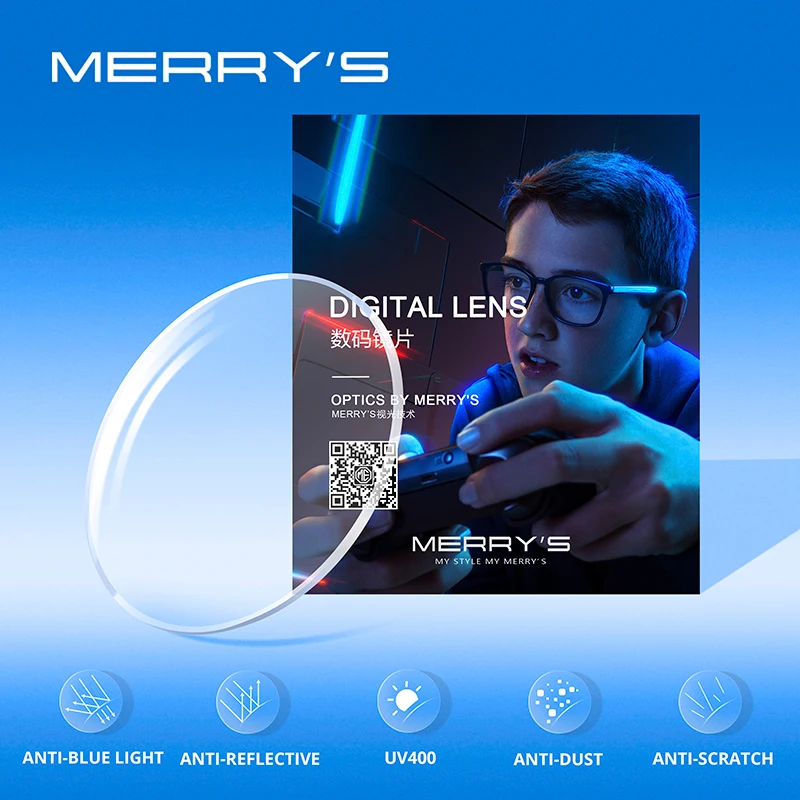
MERRYS Anti Blue Light Blocking Lens K1 Series Teens Blue Light Blocking Computer Glasses Lens Kids Prescription Optics Lens
Return&refund policy
Eligible items are covered by return and refund support. If the item does not arrive or is not as described, the buyer can request help.
Security & Privacy
Safe payments: We do not share your personal details with any third parties without your consent.
Secure personal details: We protect your privacy and keep your personal details safe and secure.
AI offer for your market
A curated pick based on category, shipping route, delivery speed and popularity in your selected market.
Why this product fits your market
- • Estimated delivery: 8.
- • Strong customer signal: 5.0★ from 13 reviews.
- • Recommendations focus on this product category and your market availability.



Product specifications
Product detail photos




Detailed product description
This product is shown with available options, market-specific pricing and verified specifications.
- Brand: MERRY'S
- Sales: 15
- Package size: 10 × 10 × 2 cm
- Package weight: 0.1 kg
- Rating: 5.0 / 5
Before adding to cart, choose an available option and check the quantity.
How To Order Prescription Glasses
Step 1: Choose frame add to cart.
Step 3: Provide your Prescription.
Step 4: Place an order,make payment and waiting for delivery.
MERRY'S OPTICS
Step 1
Step 2
Step 3
Step 4
Choose Frame
Add to cart.
Choose Lenses
Provide Your
Prescription.
Place Order
Make Payment.
Prescription Format
Please upload your scanned prescription paper in the order detailed page, or please write your prescription there as follows
Note: Remember to write the symbol "+" or "-"
Prescription
SPH
CYL
ASIX
Near ADD
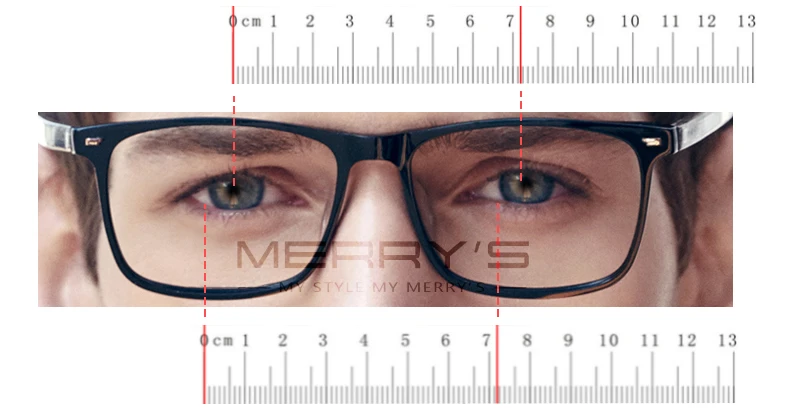
PD
Right (OD)
1.25
0.50
60
32
Left (OS)
1.75
120
33
Leave us message
Right(OD) SHP: -1.25 CYL: -0.50 AXIS: 60
Left(OS) SHP: -1.75 CYL: -1.25 AXIS: 120
PD:33/33
The numbers filled in the table are just taken as an example.
How To Read Your Prescription
This indicates the strength of the lens power, measured in Diopters (D). Most typically this is written in ¼ diopter increments (I.E. 0.25, 0.50, 0.75, 1.00). This value is the prescribed amount of correction for Nearsightedness (Myopia) or Farsightedness (Hyperopia). If the number appearing under this heading has a minus sign (–), you are nearsighted; if the number has a plus sign (+) or no sign, you are farsighted. If there is no spherical correction, it could be written as 0.00 or Plano (PL).
This indicates the strength of the lens power to correct Astigmatism. If nothing appears in this column, the value is 0 or “SPH” is written, it indicates that there is no astigmatism.
Optometrists usually write the astigmatic correction with a minus sign (-). Ophthalmologist usually write the value with a plus sign (+). These represent two different ways of determining the correction.
Astigmatism basically means the light coming into the eye comes to two focal points. To correct this, the lens uses the SPH power to move one of the focal points to the retina and the CYL power to move the other focal point to the retina.
The Axis number will be a value between 1 and 180. The diagram below demonstrates where those meridians are located. As you can see above, the number 90 corresponds to the vertical meridian of the eye, and the number 180 corresponds to the horizontal meridian. To avoid mistakes, the axis is typically written as 3 digits. For example, an axis value of 45 is usually written as 045.
This is the added magnifying power applied to the bottom part of Bifocal, Trifocal or Progressive lenses to correct presbyopia. The number appearing in this section of the prescription is always a plus power, even if it is not preceded by a plus sign (+). The add power is usually the same for both eyes, however in certain rare occasions it could be different between the 2 eyes.
A brief description of presbyopia is the acquired inability to focus on close objects. Presbyopia is a natural aging change within the eyes. There is no way to prevent it and it happens progressively over time. Presbyopia typically starts to affect people around age 40.
What Lens Index is Best For You
The lens thickness you should get depends on your prescription and your lifestyle.
Thicker lenses are more affordable, but can only accommodate lower vision correction needs.
Thinner lenses are lightweight (and more stylish!) and can accomodate ALL kinds of vision needs
including higher prescriptions!
Lens index
Suggestion Power
1.56 INDEX LENS
0.00 to -3.00
or
+0.00 to +3.00
+/- 2.00 or below
1.61 INDEX LENS
3.25 to -5.00
+3.25 to +5.00
1.67 INDEX LENS
5.25 to -8.00
+5.25 to +8.00
1.74 INDEX LENS
+/-8.25 and above
If your CYL> 2, please pay an additional $10 customization fee.